HARRISON, TN – March 11, 2026 – PRESSADVANTAGE –
Bark Busters Tree Service has expanded the operational use of crane-assisted tree removal techniques for projects involving limited access, proximity to structures, and elevated risk conditions across Hamilton County and nearby service areas. The company stated that the expanded use reflects increased demand for controlled removal methods in residential neighborhoods, commercial sites, and developed lots where traditional drop zones are limited.
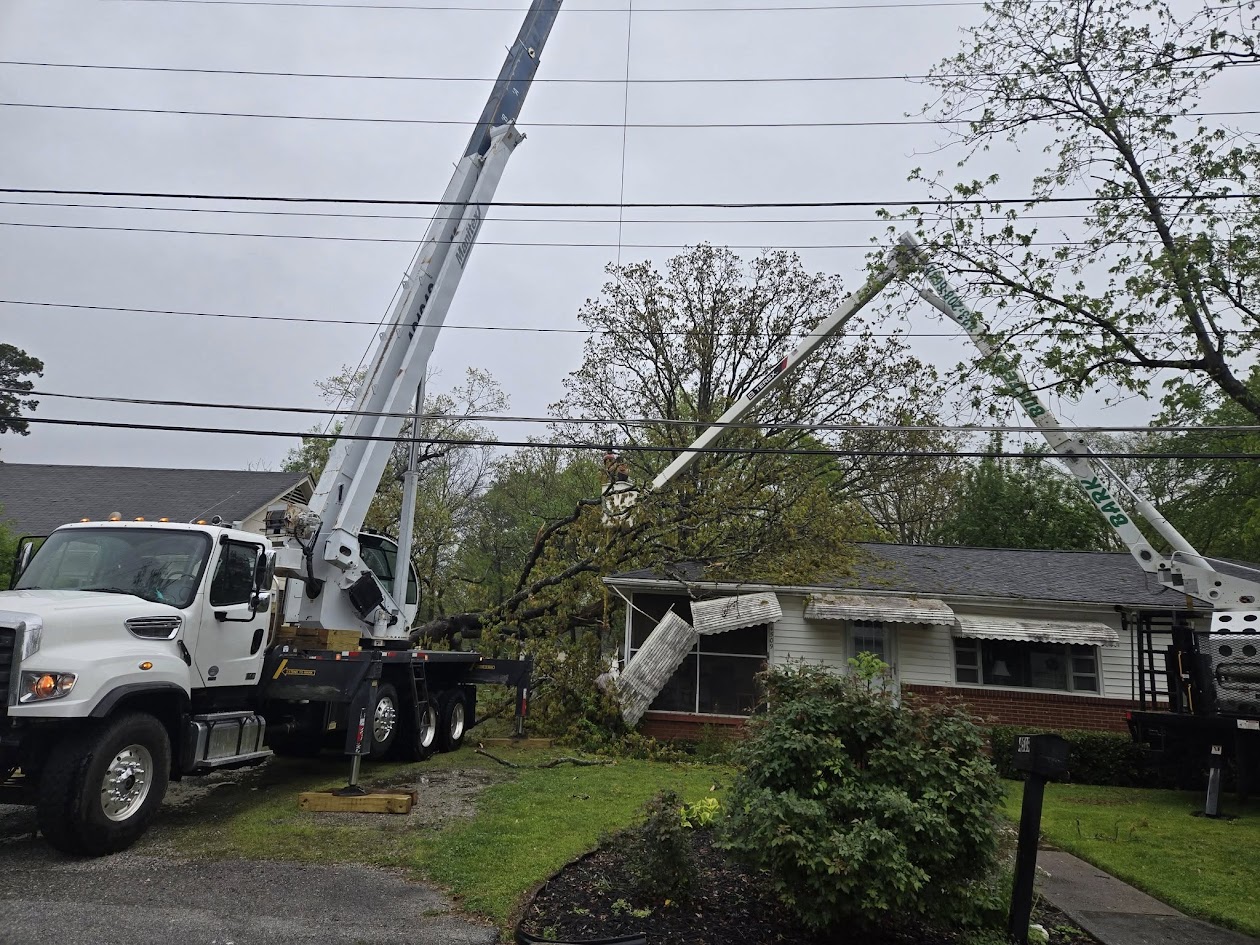
Crane-assisted removal allows large sections of a tree to be supported and moved under mechanical lift rather than relying on free fall. When a crane is positioned safely, sections can be cut, lifted, and placed into designated landing areas. Bark Busters Tree Service stated that the method can reduce the likelihood of incidental impact on structures, fences, paved surfaces, and landscaped areas when a tree is located close to built features. The approach is commonly applied when trees are adjacent to homes, near utility corridors, or positioned over driveways and access routes.
Jimmy Moore, owner of Bark Busters Tree Service, said crane-assisted work requires planning and coordination between multiple roles. “These removals depend on communication and control. Each pick has to account for weight, balance, and the space available. The goal is to remove material without uncontrolled movement,” Moore said.
The company described a pre-job planning process used to determine when crane assistance is appropriate. Site conditions are evaluated for access, ground stability, and setup constraints. Planners consider boom reach, swing radius, overhead clearance, and the location of landing zones. The tree itself is evaluated for size, structural integrity, and the presence of storm damage that may affect attachment points. Bark Busters Tree Service stated that the presence of decay, split stems, or compromised leaders can influence both section size and the sequence of dismantling.
Crane operations are integrated with rope rigging systems and ground control practices. In many cases, a climber attaches rigging to a section so the crane can take the weight before the cut is completed. Once the section is free, the crane moves it along a planned path to a landing area where ground staff can process the material. The company stated that tag lines may be used to guide rotation and limit swing, and that communication between the operator and a designated signal person is required throughout lift operations.
Bark Busters Tree Service reported that crane-assisted removals are frequently used for storm-damaged trees that have shifted over structures, trees with compromised root plates that present a tipping risk, and removals in constrained lots where drop zones are minimal. In some cases, crane assistance is used for large removals that would otherwise require extensive sectional lowering. The company stated that crane use is selected based on safety and site conditions, and that not all locations allow safe crane setup due to slope, overhead conflicts, or limited access.
Safety procedures are a defined component of crane-assisted work. The company stated that crews complete a job briefing that identifies hazards, establishes exclusion zones, and assigns responsibilities. Rigging gear, slings, and hardware are inspected before work begins. Lift planning accounts for load ratings and the weight of wood sections, which can vary based on species, moisture content, and storm saturation. Bark Busters Tree Service stated that sections are sized conservatively when conditions increase uncertainty, including when wood is saturated or when damage makes internal defects difficult to confirm visually.
Controlled cutting practices are used to limit tear-out and reduce shock loading on rigging systems. The company stated that complex removals often require staged dismantling, beginning with canopy reduction to clear hazards, followed by stem sectioning, and concluding with trunk management near the base. Throughout the process, landing areas are kept clear, and processing activities are coordinated to prevent congestion near the lift path and landing zone.
The expansion includes additional training for crew members involved in signaling, rigging, and load management. Bark Busters Tree Service stated that standardized hand signals and radio communication are used to confirm picks, pause operations, and address unexpected movement. Ground crew roles include establishing landing areas, clearing paths, coordinating processing, and maintaining clear lines of sight when possible. The company stated that a stop-work condition is invoked when hazards change or when movement suggests conditions differ from the initial plan.
The company reported that crane-assisted work can support post-storm response timelines by enabling controlled removal where hazards limit direct access. However, Bark Busters Tree Service stated that timelines remain dependent on weather, site access, and utility coordination where applicable. Emergency work involving trees on lines may require utility involvement before removal can proceed.
Bark Busters Tree Service provides tree removal, trimming, pruning, stump grinding, and emergency response services for residential and commercial properties. The company operates from Harrison, Tennessee, and serves communities throughout Hamilton County and nearby areas. Bark Busters Tree Service stated that it is licensed and insured and that work methods prioritize safety planning and site control.
###
For more information about Bark Busters Tree Service, contact the company here:
Bark Busters Tree Service
Jimmy Moore
(423) 208-6643
barkbusters88@gmail.com
5899 TN-58, Harrison, TN 37341